Research Methodology introduction for minimum flow assurance for main export pipeline
Course Description
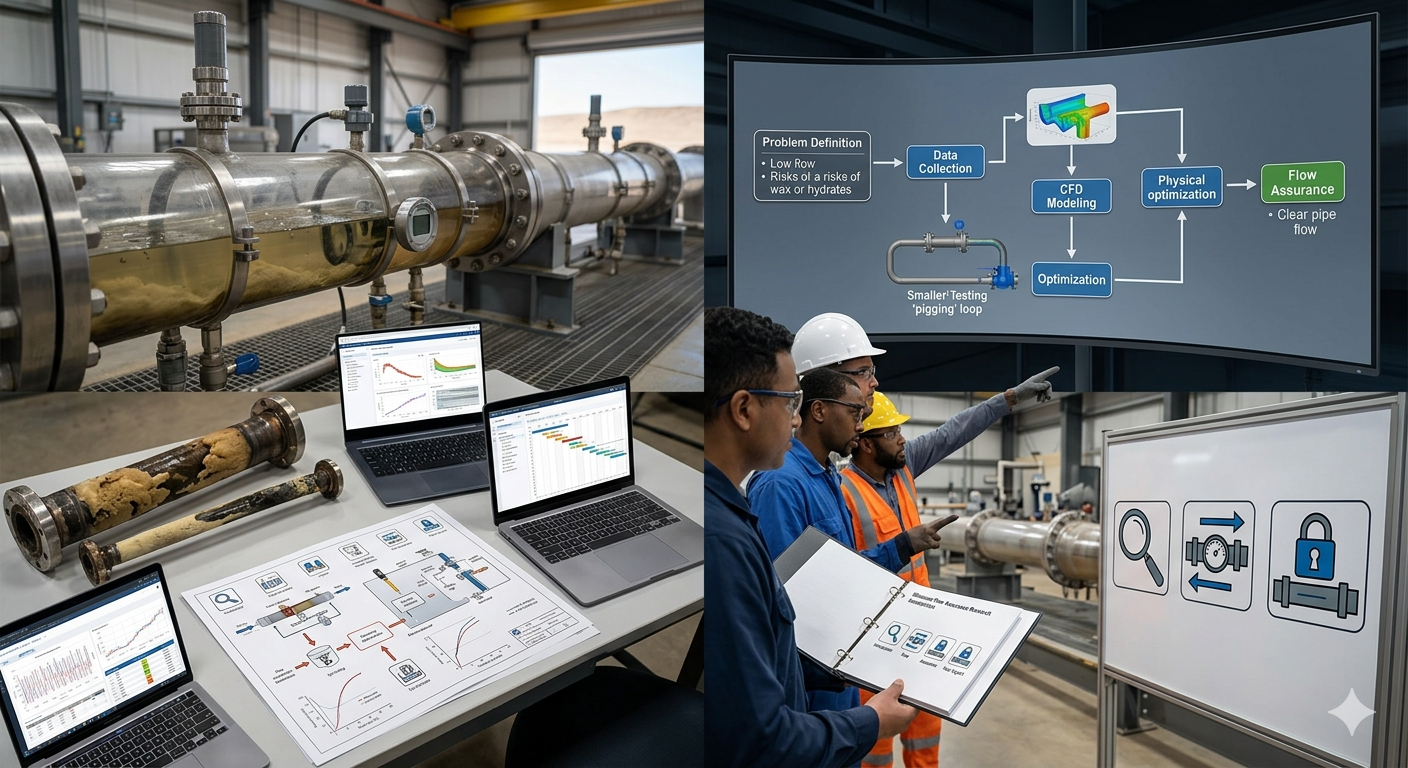
Flow assurance is the application of multiple disciplines to ensure economic rates of flow from the hydrocarbon reservoir to a production facility over the life of a field and in any environment. A variety of problems can be encountered to the detriment of the piping system and associated equipment.As an example, multiphase mixtures of oil, natural gas, water and deposits are normally piped between the reservoir and the surface. In addition, the flow regime may change at different sections of the pipeline. All these issues can lead to a multitude of pipeline failures including corrosion, erosion and blockage, etc.This 5-day intensive Flow Assurance training course provides participants with fundamental knowledge about variety of disciplines that are required to safely and economically transport the process throughout different sections of the piping system. This is particularly beneficial for any company hoping to avoid the high maintenance and failure costs associated with process transport. The fluid journey from reservoir pore to process facility involves many disciplines using advanced technologies. Even long-producing fields develop flow assurance problems as time goes by and ever-deeper fields bring new challenges that extend the envelope our industry can safely and economically produce.Optimum flow assurance design and operation requires the evaluation of all disciplines interfacing flow assurance, as well as careful consideration of the interactions between the fluid, reservoir, wells, pipelines, surface facilities, and the surrounding environment. Through the detailed understanding of these disciplines, combined with the unique fluids capabilities and integrated approach, participants will learn the capability of bringing all of these together. The goal of this course will be to increase, in participants, an understanding of the major problems associated with flow assurance, such as asphaltenes, paraffins, emulsion, scales, corrosions, and hydrates. The class will review the conventional methods and new approaches to prevent, control, and remediate the major problem causes to assure the flow. A comparative analysis on the technology available and the advantages and disadvantages of each will be discussed. Participants will learn how to identify the causes and mechanisms of flow impediment, along with the methods and technologies that can be applied for prevention, control, and remediation of the depositions.
The Training Course Will Highlight ?

This training course will feature: 

  • Process flow regimes, influence and mitigation 
  • Structural integrity of piping systems 
  • Environmental concerns and control 
  • Pipeline corrosion principles, control and protection 
  • Influence of substance formation, hydrates, waxes, etc. 
  • Pipeline inspection, maintenance and cleaning 
Training Objective

By the end of this training course, participants will be able to: 

  • Have a sound understanding of relevant flow regimes that affect the integrity of piping systems and methods of control 
  • Recognise the cause and influence of the formation of substances that may damage the piping system or disrupt the process flow 
  • Recognise various aggressive environmental factors affecting pipeline systems 
  • Understand the basic principles of pipeline corrosion and methods of protection 
  • Understand the application of relevant pipeline maintenance and cleaning techniques 
  • Have knowledge of process metering methods 


Target Audience

This training course is suitable to a wide range of professionals but will greatly benefit: 

  • Maintenance and inspection engineers 
  • Construction engineers 
  • Risk assessment personnel and health & safety officers 
  • Facilities engineers and operators 
  • Managers and supervisors 
  • Project planners and procurement personnel 
  • Plant contractors 
  • Flow assurance engineers,  
  • Field production operations staff,  
  • Field chemist staff,  
  • Surface facility design engineers,  
  • Surface facility operations engineers,  
  • Production managers. 

Training Methods

This training course will utilise a variety of proven adult learning techniques to ensure maximum understanding, comprehension and retention of the information presented. The daily workshops will be highly interactive and participative. This involves regular discussion of applications as well as hands-on exposure to real life examples. 

Participants will be provided with comprehensive hard and electronic course notes and copies of all presentation material. Relevant computer simulations and videos will be utilised to help with the understanding of the various topics. 

Daily Agenda

Day One:Pipelines Systems and Structural Integrity 

  • Introduction to process pipelines from source to production facility 
  • Types of pipes, specifications and construction 
  • Materials strength and relevant mechanical properties 
  • Pipeline structural integrity and mechanical failure, Fatigue, Creep, etc. 
  • Water hammer 
  • Worked examples of stress analysis 
  • Materials of construction 

Day Two:Corrosion and Corrosion Control of Pipeline Systems 

  • Principles of corrosion 
  • Kinetics of corrosion 
  • Forms of Corrosion 
  • Uniform 
  • Bimetallic 
  • Pitting 
  • Stress corrosion cracking 
  • Erosion Corrosion 
  • Microbiologically influenced corrosion (MIC) 
  • Hydrogen Induced, H2S, CO2 
  • Pipeline Coatings, External, Internal 
  • Corrosion Inhibitors 
  • Cathodic Protection, Sacrificial, Impressed Current 

Day Three: Fundamental Principles of Flow Regimes and Flow Control 

  • Fundamental fluid Laws 
  • Flow profiles 
  • Pressure loss 
  • Multiphase flow 
  • Holdup effects 
  • Gas-liquid flow regimes in horizontal and vertical pipes, Flow regime maps 
  • Multiphase pumping systems 
  • Slug flow problems and damage 
  • Slug catchers 

Day Four:Unwanted Products in Pipelines and Methods of Control 

  • Pipeline clogging and blockage of pipelines 
  • Unwanted product types 
  • Sand 
  • Salinity 
  • Hydrates 
  • Wax 
  • Asphaltenes 
  • Emulsions 
  • Scale 
  • Corrosion and Abrasive contents 
  • Chemicals injected to achieve flow assurance, Hydrate Inhibitors, Drag Reducing Agents, Solvents, etc. 
  • Testing and separation of unwanted products 

Day Five:Pipeline Maintenance, Cleaning & Inspection and Flowrate Measurements 

  • Direct and indirect pipe inspection 
  • Pigging methods for cleaning 
  • Pigging Inspection 
  • Hydro-testing 
  • Inspection (NDT) techniques, x-ray, ultrasonic, Magnetic, etc. 
  • Overview of API 570 Pipe Inspection Code 
  • Flow rate measurements 
Accreditation

RECTUS attendance certificate will be issued to all attendees completing minimum of 80% of the total course duration.

Quick Enquiry

Request Info

Download Brochure Request In house Proposal

Course Rounds : (5 -Days)


Code Date Venue Fees Register
ME156-01 10-05-2026 Cairo USD 5450
ME156-02 24-08-2026 Zürich USD 6950
ME156-03 22-11-2026 Dubai USD 5450
Prices doesn't include VAT

UpComing Date


Details
  • Start date 10-05-2026
  • End date 14-05-2026

Venue
  • Country Egypt
  • Venue Cairo

Quality Policy

 Providing services with a high quality that are satisfying the requirements
 Appling the specifications and legalizations to ensure the quality of service.
 Best utilization of resources for continually improving the business activities.

Technical Team

BTS keen to selects highly technical instructors based on professional field experience

Strengths and capabilities

Since BTS was established, it considered a training partner for world class oil & gas institution

Search For Available Course

Abu Dhabi, UAE

1st floor, Incubator Building- Masdar City - Abu Dhabi - United Arab Emirates

00971-2-5757062

Sun to Fri 09:00 AM to 06:00 PM

info@rectustraining.com

Contact Us anytime!